Author: Fernanda Perrone

  • 2023 Louis Faugères Bishop III Lecture: “Researching the Underground Railroad in the Digital Age” by Professor Graham Hodges

    Professor Graham Hodges (courtesy of Colgate University)
    Professor Graham Hodges (courtesy of Colgate University)

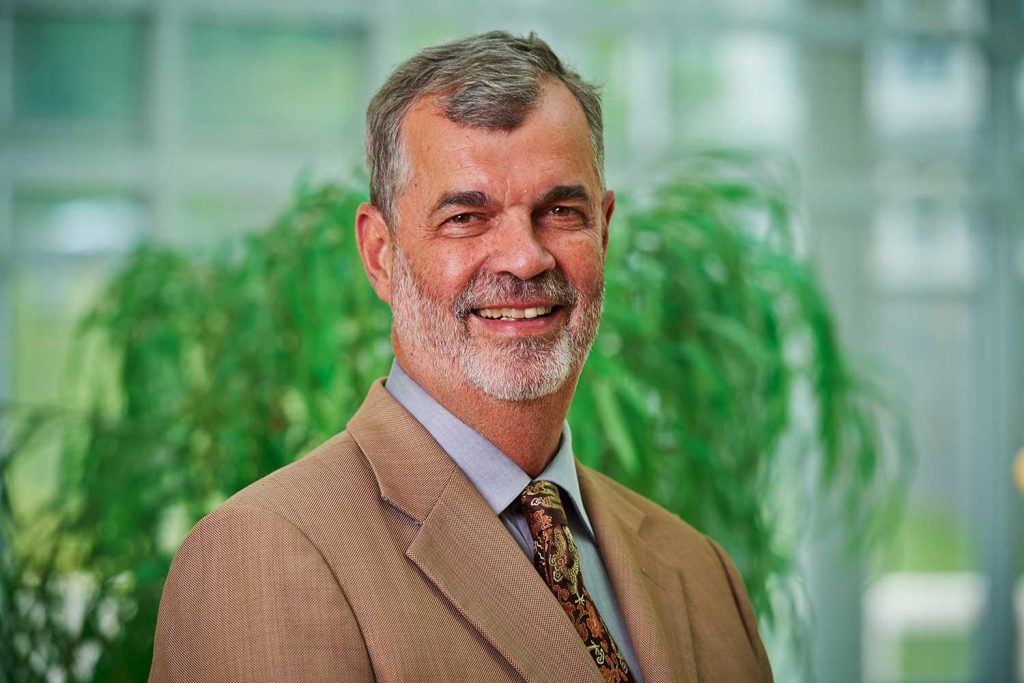
    Professor Graham Hodges, the George Dorland Langdon Jr. Professor of History and Africana Studies at Colgate University, will deliver the 2023 Louis Faugères Bishop III Lecture, “Researching the Underground Railroad in the Digital Age,” on Thursday, March 23, at 4:00 p.m. This year’s lecture will be held online. Please register at this link.

    Professor Hodges is the author of numerous books, including several related to African Americans in New Jersey. He is the author of Black New Jersey, 1664 to the Present Day (Rutgers University Press, 2019), Pretends to Be Free: Runaway Slave Advertisements from Colonial and Revolutionary New York and New Jersey (Fordham University Press, 2019), Root and Branch: African Americans in New York and East Jersey, 1613–1863 (The University of North Carolina Press, 1999), and Slavery and Freedom in the Rural North: African Americans in Monmouth County, New Jersey, 1660–1865 (Rowman & Littlefield Publishers, 1997). He has directed eight National Endowment for the Humanities summer seminars (for teachers) on abolitionism and the Underground Railroad.

    The Bishop Lectures feature diverse topics on book and manuscript collecting, printing history, and the use of rare books and manuscripts. The series is named in memory of Louis Faugères Bishop Jr.’s son, a prominent cardiologist and book lover who helped build one of the excellent New York private libraries at the New York Racquet Club. Although he was a Yale University alumnus, Dr. Bishop had close family ties to Rutgers and New Brunswick—Bishop House and Bishop Place on the College Avenue campus were named after his ancestors. Dr. Bishop attended the first Bishop Lecture in 1985 but sadly died the following year.
     

  • Special Collections and University Archives Hosts Joe Pompeo Book Talk

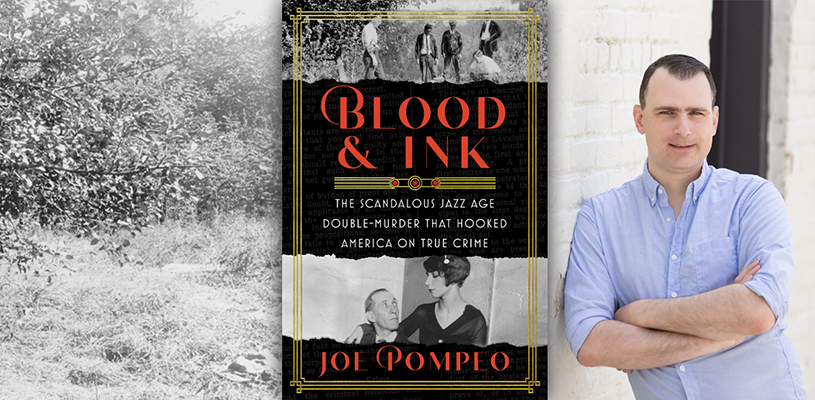
    Joe Pompeo, author of "Blood & Ink."

    On November 10, Special Collections and University Archives hosted a virtual book talk with Vanity Fair correspondent and Rutgers alumnus Joe Pompeo ’04. Pompeo spoke about his new book on the notorious Hall-Mills murders, Blood & Ink: The Scandalous Jazz Age Double Murder That Hooked America on True Crime.

    > Click here to watch the presentation.

    Blood & Ink explores the slayings of star-crossed New Jersey lovers and how the century-old cold case fed America’s obsession with true crime stories. While conducting his research for the book, Pompeo relied heavily on Special Collections and University Archives (SC/UA), which he says houses the definitive academic archive on the murders. Pompeo used SC/UA’s Hall-Mills Collection, Wallace Conover Papers, and Stevens family letters. This presentation forms part of SC/UA’s Research Salon series, which features researchers who have used SC/UA’s resources in their work. The series is co-sponsored by the New Jersey Studies Academic Alliance.

    Blood & Ink was published by William Morrow in September 2022, marking the 100th anniversary of the double murder of Reverend Edward Hall, rector of St. John the Evangelist Episcopal Church in New Brunswick, and Eleanor Mills, a singer in the church choir. The couple was reputedly having a scandalous affair, and their bodies were discovered artfully posed on a notorious lover’s lane on the border of New Brunswick and Somerset. Edward Hall’s wife, Frances, who was related to the wealthy Johnson family, and Eleanor Mills’ husband, Jim, were early suspects in the case. The bungled investigation by the police took years and failed to bring the criminals to justice. The trial featured eccentric characters such as Jane Gibson, a pig farmer who came forward with a purported eyewitness account of the murder and, at one point, testified from a stretcher brought into the courtroom. As well as investigating the fascinating details of the case, Pompeo shows how the rise of New York tabloid journalism and the resulting wars between papers of the 1920s kept the story alive. In an epilogue, Pompeo suggests his own theories on the still-unsolved case.

    Over the years, many authors have tried to solve the case, including famed attorney William Kunstler, whose The Minister and the Choir Singer: The Hall-Mills Murder Case (1964) attributed the murders to the Ku Klux Klan. Another theory was offered by former dean Mary S. Hartman, who lived in Frances Hall’s house, now the residence of the Douglass Dean, in “The Hall-Mills Murder Case: The Most Fascinating Un-solved Homicide in America,” The Journal of the Rutgers University Libraries, 1984. The case has also inspired novels and plays, most recently Thou Shall Not, performed at St. John the Evangelist Church by Thinkery & Verse. Blood & Ink is unique in placing the case in the context of the rise of tabloid journalism and the popularity of true crime in the 1920s.

    Read more about the book and author in “Looking Back at the Crime of the Century,” an article by Amy Vames for the Rutgers University Alumni Association.

  • Author Talk with Joe Pompeo on Infamous New Jersey Cold Case

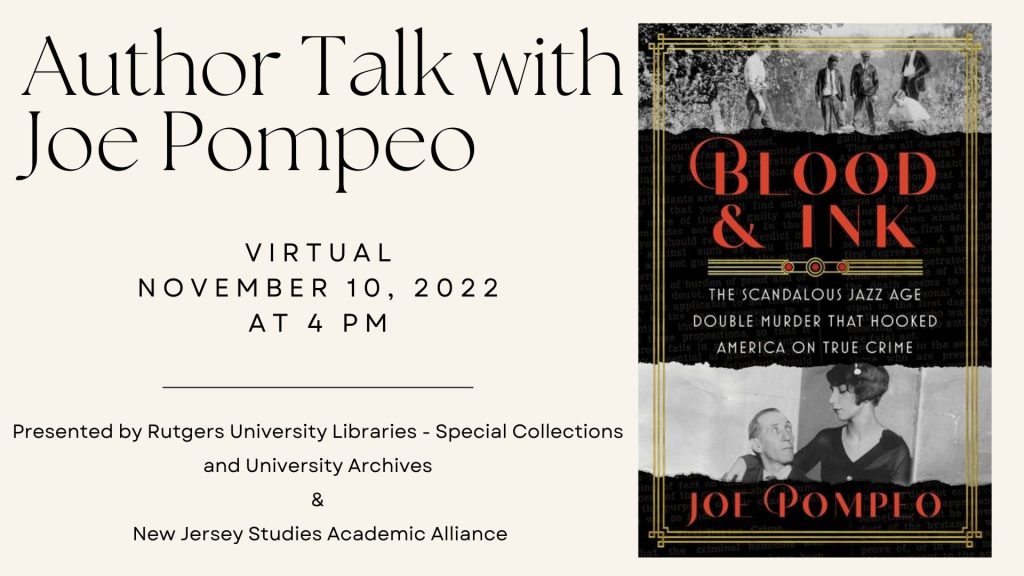
    Author Talk with Joe Pompeo.

    Rutgers University Libraries Special Collections and University Archives (SC/UA) and the New Jersey Studies Academic Alliance (NJSAA) are pleased to host an author talk with Vanity Fair correspondent and Rutgers University alumnus Joe Pompeo on Thursday, November 10, 2022, at 4:00 p.m. via Zoom. Pompeo will speak about his new book on the notorious Hall-Mills murder case, Blood & Ink: The Scandalous Jazz Age Double Murder That Hooked America on True Crime. Please register at this link or visit libcal.rutgers.edu/event/9365079 for more information.

    Blood & Ink was published by William Morrow this month, marking the 100th anniversary of the double murder of Reverend Edward Hall, rector of St. John the Evangelist Episcopal Church in New Brunswick, and Eleanor Mills, a singer in the church choir, who were reputedly having a scandalous affair. Their bodies were discovered artfully posed on a notorious lovers’ lane on the border of New Brunswick and Somerset. Edward Hall’s wife, Frances, who was related to the wealthy Johnson family, and Eleanor Mills’ husband Jim were early suspects in the case. The bungled investigation by the police took years and failed to bring any criminals to justice. The much-anticipated trial featured eccentric characters such as Jane Gibson, a pig farmer who came forward with a purported eyewitness account of the murder, at one point testifying from a stretcher brought into the courtroom. As well as investigating the fascinating details of the case, Pompeo shows how the rise of New York tabloid journalism and the resulting wars between papers of the 1920s kept the story alive. In an epilogue, Pompeo suggests his own theories on the still-unsolved case.

    Joe Pompeo
    Joe Pompeo (photo by New Moon Photography)

    In his well-researched book, Pompeo used the Hall-Mills Collection, as well as the Wallace Conover Papers and the Stevens family letters from SC/UA. This presentation forms part of SC/UA’s Research Salon series, which features researchers who have used SC/UA’s resources in their work. It is co-sponsored by the New Jersey Studies Academic Alliance.

    Over the years, many authors have tried to solve the case, including famed attorney William Kunstler, whose The Minister and the Choir Singer: The Hall-Mills Murder Case (1964) attributed the murders to the Ku Klux Klan. Another theory was offered by former dean Mary S. Hartman, who lived in Frances Hall’s house, now the residence of the Douglass Dean, in “The Hall-Mills Murder Case: The Most Fascinating Un-solved Homicide in America,” The Journal of the Rutgers University Libraries, 1984. The case has also inspired novels and plays, most recently Thou Shall Not, performed at St. John the Evangelist Church by Thinkery & Verse. Blood & Ink is unique in placing the case in the context of the rise of tabloid journalism and the popularity of true crime in the 1920s.

    Joe Pompeo is a correspondent at Vanity Fair who previously worked at publications including Politico and The New York Observer. His writing has also appeared in The New York Times, Bloomberg Businessweek, the Columbia Journalism Review, and many other outlets. He lives in Montclair, New Jersey, with his wife and children.

  • Scholars Collaborate on Unique Book Project at RUL

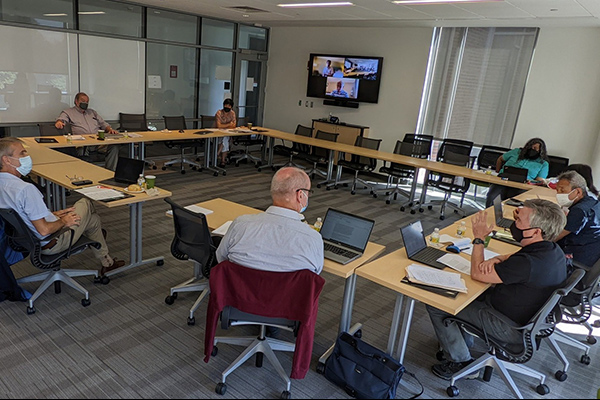
    SCUA book project meeting in August 2022

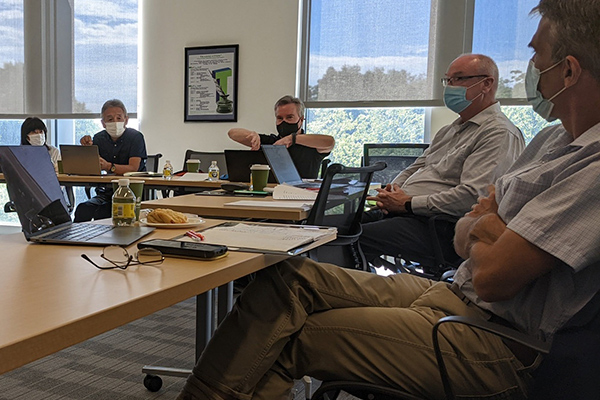
    From August 11–13, a group of scholars met in New Brunswick to work on a new book. Tentatively titled, In Search of True Ways: Rutgers and Japan during the Early Meiji Period, this book is being edited by Haruko Wakabayashi of Rutgers’ Department of Asian Languages and Cultures and Fernanda Perrone of Rutgers University Libraries Special Collections and University Archives (SC/UA). This project is unusual in that it combines scholarship written in English with that written in Japanese, giving a broad perspective and bringing to light much new information.

    SCUA book project meeting in August 2022

  • Ann D. Gordon to Give Presentation on Women’s Suffrage in New Jersey

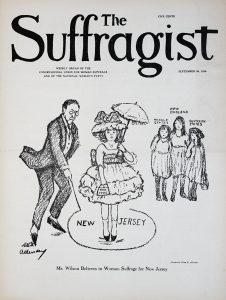
    2020 marks the 100th anniversary of the Nineteenth Amendment (1920) granting women the right to vote. In celebration of this milestone, Rutgers Research Professor Emerita of History Ann D. Gordon will give a presentation, “Bringing the Story Home: Agitating for Woman Suffrage in New Jersey,” on Thursday, September 24, 2020 at 4 p.m.
    Activists organizing for women to gain voting rights were everywhere across the United States, island territories included.  The struggle to win the right to vote is a national story chock full of local details, highlights of which will be explored in this presentation.

    Ann D. Gordon is Research Professor Emerita of History at Rutgers University. She has studied the movement for woman suffrage for nearly four decades as an author, editor, and lecturer. Her six-volume edition of the Selected Papers of Elizabeth Cady Stanton and Susan B. Anthony was published from 1997 to 2013. Toward celebrating woman suffrage at this centennial, her essay on the 19th Amendment appears in the National Park Service’s website publication, 19th Amendment and Women’s Access to the Vote Across America; she served as a historical advisor to the National Archives in preparing its suffrage centennial exhibit, Rightfully Hers; and, until the pandemic, she lectured often on the history of voting rights.
    This program marks the opening of the Special Collections and University Archives online exhibition, On Account of Sex: The Struggle for Women’s Suffrage in Middlesex County, New Jersey. More details about the exhibition will be forthcoming.

  • Dorothy Gillespie Papers Digitization Project

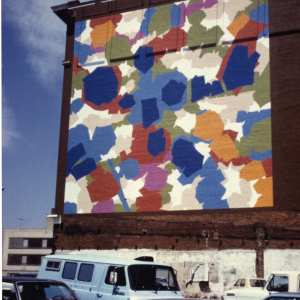
    Dorothy Gillespie papers, box 13 folder 12 (Site Specific, City Wall, Roanoke, 8 x 10″, 1979) https://doi.org/doi:10.7282/t3-kpk6-n764

    We are delighted to announce that the first phase of the Dorothy Gillespie Papers digitization project is now completed and ready to be used by researchers at https://collections.libraries.rutgers.edu/dorothy-gillespie-papers

    Dorothy Gillespie (1920-2012) was an abstract sculptor and painter whose archives are part of the Miriam Schapiro Archives on Women Artists at Special Collections and University Archives. Born in Roanoke, Virginia on June 29, she attended the Maryland Institute College of Art in Baltimore. Moving to New York City in 1943, she continued her studies at the Art Students League and at Atelier 17, a printmaking studio that emphasized experimentation. In 1946 she married Bernard Israel, and subsequently had three children. Soon afterwards, she began painting in a completely gestural style influenced by Abstract Expressionism. In the 1950s, she and her family moved to Miami, Florida, where she secured group exhibitions and a solo exhibition at the Miami Museum of Art in 1962. As a young married woman, Gillespie encountered discrimination in the art world, finding herself labeled a “housewife painter.” These early experiences helped raise her consciousness as a feminist.

    In the mid-1960s, Gillespie and her family moved back to New York City. Gillespie’s use of oil paint began to diminish as she experimented with paper, pastels, and acrylic. The Gillespies owned Gallery Champagne, a champagne nightclub located in Greenwich Village, which provided a space for Gillespie to display her art. In the 1970s, Gillespie became involved in the feminist art movement. She organized exhibitions, created a collection of women’s art, compiled statistics, and took part in protests against galleries. The bright and whimsical style of her sculptures created various public art opportunities for her in the 1980s. In the 1980s and 1990s, she donated many pieces from her own art collection, as well as her own artwork, to various universities in order to create university art collections.

    Since her death in 2012, her son Gary Israel has been dedicated to preserving her legacy. This digital project, which foregrounds a selection of images of Gillespie’s work, was made possible by a generous gift from the Dorothy M. Gillespie Foundation. The donation funded two students from the Douglass Residential College, Talia Lang and Ana Couto Barbosa, to scan and create metadata for the images in Summer 2019.

    Couto was inspired by the project to pursue a degree in library science: she will begin the Master of Information program at Rutgers in September. “During this experience, I learned about digitization, metadata, archival standards, and the importance of information organization. The internship opened my eyes to the vastness of library science and its career opportunities,” she said.

    The Dorothy Gillespie digitization project will resume next summer. We would like to express special thanks to Isaiah Beard, Geoffrey Wood, Marty Barnett, and Sam McDonald for helping make this project a reality.

  • Rutgers Meets Japan

    The planned exhibit was converted to a digital exhibit, which will be mounted on the course website.

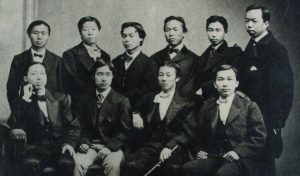
    In 1867, Kusakabe Tarō (1844-1870), a samurai from Fukui in the remote west of the country, left Japan to study at Rutgers. After his untimely death in 1870, his mentor and friend, William E. Griffis (1843-1928) of the Rutgers Class of 1869, was invited to teach Western-style education in rapidly modernizing Japan. Griffis would spend his life writing and speaking about Japan and collecting books and archival material. His collection came to Rutgers Special Collections and University Archives (SC/UA) after his death. This spring, Haruko Wakabayashi of the Department of Asian Languages and Cultures, is teaching “Rutgers Meets Japan: Revisiting Early U.S.-Japan Encounters,” an interdisciplinary honors seminar based on the Griffis Collection. This seminar examines this crucial moment of early U.S.-Japan relationship and cultural exchange as we commemorate the 150th year since William E. Griffis left for Japan. As curator of the William Elliot Griffis Collection at SC/UA, I am supporting the class through helping them access books, documents, and images from the collection. Assignments are based on primary sources and prints from the Griffis Collection and the Zimmerli Art Museum, which are posted on the course website. For the final project, students planned to curate an exhibition at the Alexander Library using materials from the Griffis Collection. The culmination of the course was meant to be a two-week field trip, “The Japan that Griffis Saw,” where the students along with Professor Wakabayashi and myself would visit in Fukui, Yokohama, and Tokyo.

    On March 10, the class visited SC/UA to use maps and city directories to try to envision what New Brunswick was like at the time Griffis and Kusakabe were students. When we learned the next day that all Rutgers courses were going online after spring break, we had to adapt quickly. The planned exhibit was converted to a digital exhibit, which will be mounted on the course website (https://sites.rutgers.edu/rutgers-meets-japan). The trip to Japan was postponed until January.

    Access to the Griffis Collection was an even more difficult problem. In 2000, the Griffis Collection was microfilmed through an agreement with Adam Matthew, a company in the U.K. In 2017, Rutgers contracted with Adam Matthew to digitize this material, with a stipulation that Rutgers would get free access. When it became apparent that we would have no physical access to the Libraries for the rest of the semester, I followed up with Adam Matthew Digital regarding the status of the project. Thanks to Jeff Carroll, Elizabeth York, and their teams, the digital version of the Griffis Collection is now available through the database Area Studies: Japan, enabling students to access digitized primary source documents from the collection. Class discussion now takes place on the Canvas site. According to student Raj Malhotra, SAS ’22, “The transition to this digital classroom environment has come with its expected difficulties, but has shown us how to stay connected through the vast digital libraries and resources available for class meetings and teachings.” All are looking forward to the trip, which we hope will still take place.